Psoas
The Psoas (pronounced so-as) is located at the gravitational midline behind the abdominal muscles deep within the belly core... The deepest fluid tissue is the psoas. It is not merely a muscle and does not respond well to muscular ways of toning, strengthening, or stretching.
– Liz Koch
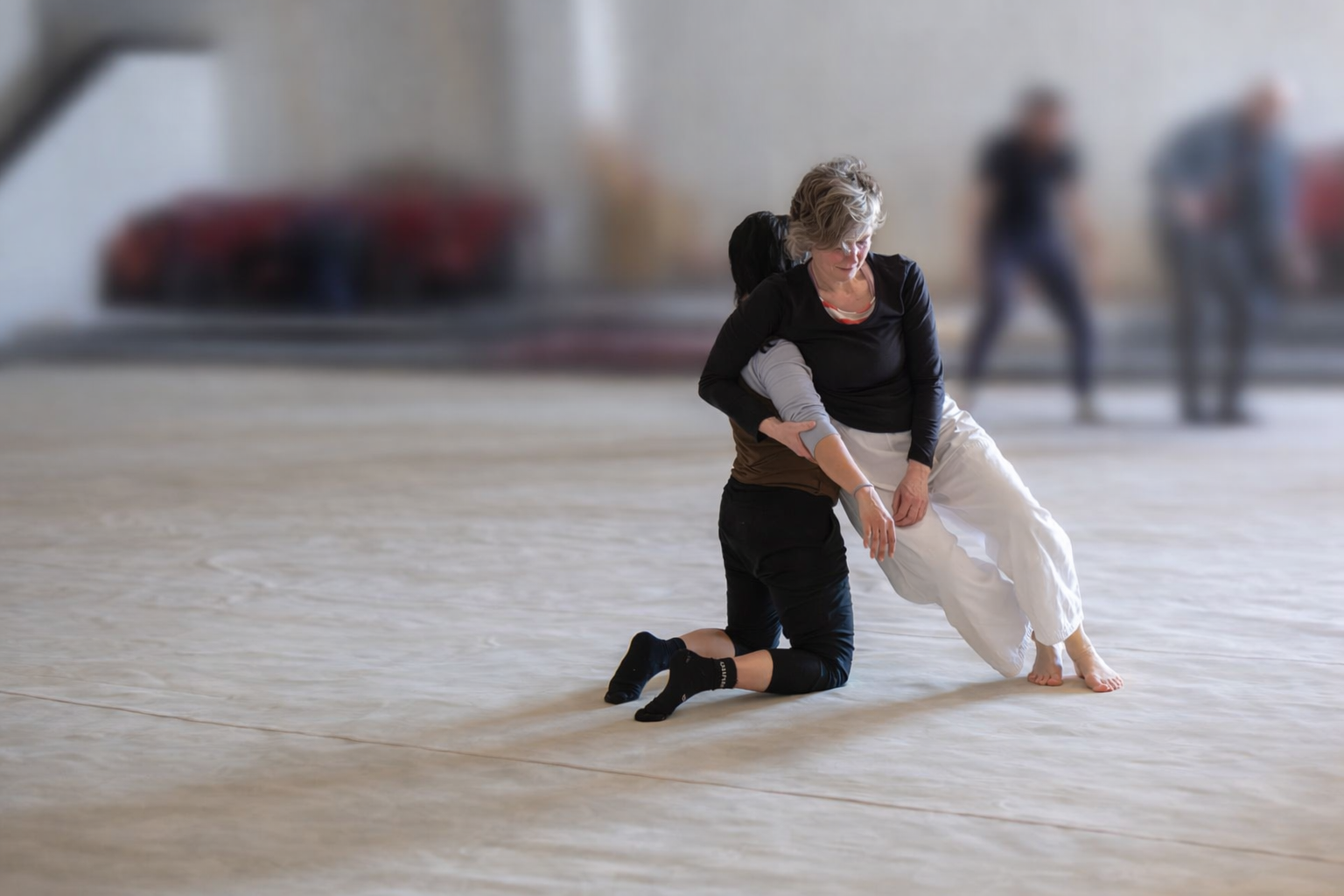
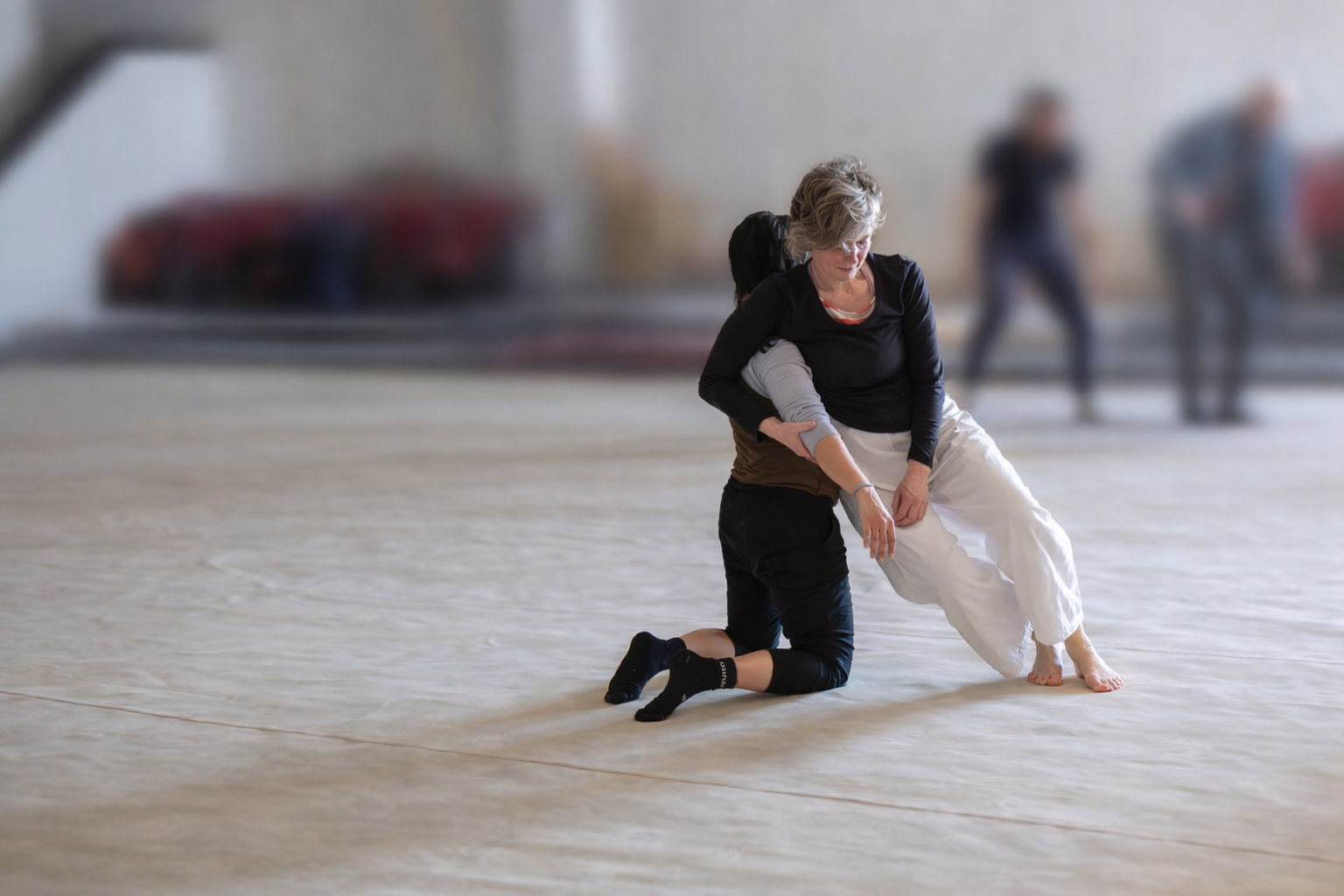
Working with me invites you to connect with, nourish, and restore your dynamic core — the psoas. I guide you through simple, yet profound movement explorations that support a healthy, functional psoas. This can relieve pain through developing your proprioceptive awareness of who your are. Together, we support your body’s innate capacity to unravel layers of muscular and skeletal compensation, restoring coherence and ease. Your pelvis and spine often start the journey.
When I first discovered the world of the psoas, I realized that my lifelong desire to learn how to dance was rooted in a longing — to become fluid. As I began to take dancing seriously, I was fascinated by movers who seemed to travel easefully and timelessly with the ground. I admired how they seemed to fall through space ready to change direction at any moment, their jumps and deep landings buoyant, their pirouettes unforced. I was in awe of their coherence and spatial awareness.
It felt as though these dancers had access to something I did not. Watching them stirred something profound in me — a sense of being transported to a more meaningful place from which to move, and ultimately to live. I felt exhilarated and, at times, envious. My deepest desire was to access that same embodied magic.
Now, 25 years later, I understand that their fluidity arose from an intimate felt sense between their joints within their fluid internal environment — bones moving like a string of pearls. They had cultivated an internal compass. Their awareness of their inner landscape gave them clarity in external space, allowing them to trust the support of their bones in relationship to gravity.
We are all fluid beings, regardless of how dense, tense, or traumatized we may feel. No matter how long we’ve believed we cannot access ease, fluidity remains our nature. We are made of living, fluid tissue. Even bones — often declared as solid and inert — are alive and bustling, reverberating to the tempo of oceanic movement.
Psoas territory is deep. We cannot go deeper. It touches the imprint of everything we have lived. To meet it requires tending, listening, and respect for its voice and messages. It asks for kindness, observation, and patience. As we soften and make space, our core can emerge and express itself more freely and dynamically.
The psoas teaches us about tenderness, about humanity, and about life as a continuous unfolding. It shows us that depth and flow arise not from effort, but from participation. It is a pathway toward wholeness — toward power rooted in integrity, safety, and agency.
Let’s go deep together and meet ourselves with loving presence.
“When one tugs at a single thing in nature,
one finds it attached to the rest of the world.”
– John Muir
I am psoas savvy certified by Liz Koch in 2025.
Introduction of psoas "muscle" by Liz Koch:
Psoas is a primal messenger emerging from the neuro-rich core of your being. It is part of your reptilian brain and primal movement for survival. A bio-intelligent tissue, psoas expresses integrity on every level and in many traditions is perceived as the guardian of your life force, center, Hara, or what is commonly referred to as the center of gravitational movement. Located deep within the center axis, and growing out from your spine, your psoas is a source of power, integrity, safety, and agency.
The Psoas (pronounced so-as) is located at the gravitational midline behind the abdominal muscles deep within the belly core. The psoas is a pendulum that spans from the solar plexus to the upper leg allowing free-swing of the leg while walking. Influencing every aspect of health and well-being, a healthy, dynamic psoas is a powerful expression of coherency and responsive functioning. The psoas is essential to:
- Skeletal balance
- Flexibility
- Range of motion
- Joint rotation
- Organ functioning
- Breathing
- Circulation
- Adrenal health
- Nerve functioning
- Emotional stability
- Natural birth
Additionally, working with the psoas helps to dismantle layers of tension and a multitude of muscular and skeletal compensations. Thus, gaining and maintaining a functional psoas is vital for recovering from symptoms and conditions such as:
- Low back pain
- Sciatica
- Excessive menstrual cramping
- Hip socket tension
- Groin pain
- Scoliosis
- Knee, neck, and ankle tension
- Bladder disturbances
- Digestive upsets
An essential aspect of the sympathetic neuro-core (fight-flight-freeze response), the psoas expresses a person’s innate sense of safety. The psoas is an involuntary muscle which is instinctive and emotionally responsive. By tuning into the psoas through awareness rather than deploying invasive techniques or manipulative releasing approaches, enables a person to gain a deep sense of calm, integrity, and empowerment.